

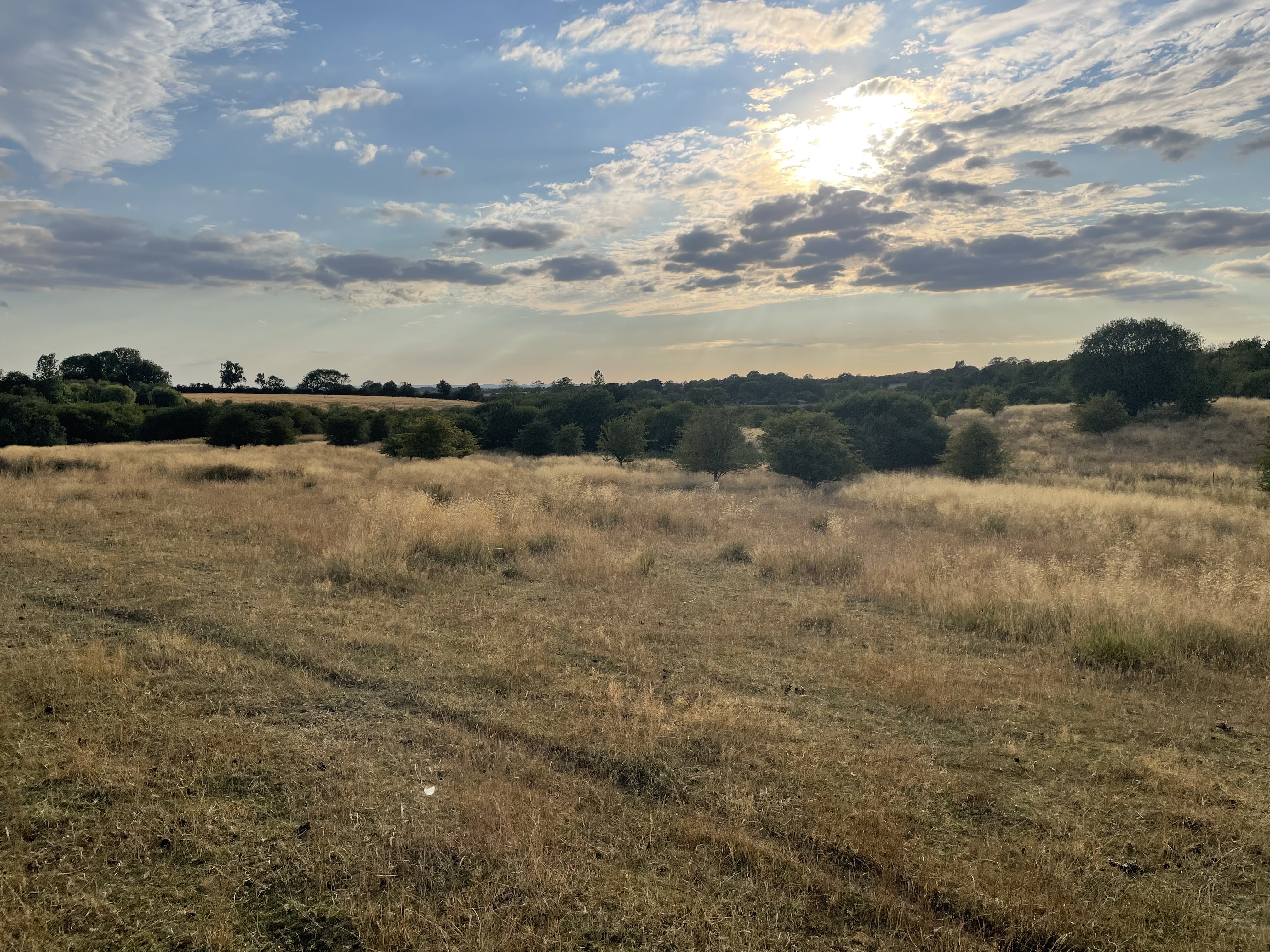
The Lincolnshire Wolds, not the African Savannah. Photo Credit: Johnny Campbell
The State of Nature in the UK
Climate anxiety hit me hard this summer: five heatwaves making everyday life difficult for many, deadly for some; wildfires rampaging through farms, forests and homes; water shortages and over 71% of England declared to be in drought; and historically low food production. Worse still is the forecast that this isn’t a one-off, but a new normal for our once ‘green and pleasant’ land…
Even before this unprecedented summer, the UK had been identified as one 'the most nature-depleted countries on Earth'.1 Nature loss represents a growing risk to our national security2 and economic resilience, with degrading ecosystems causing recurring environmental volatility (e.g. flooding) that drags on economic growth and drains limited public funds.
Unaddressed, nature degradation is estimated to reduce UK GDP by 6-12% in the 2030s - greater than the impact on the UK economy of the 2008 Global Financial Crisis (4-6%).3
The Good News
The good news is that a ready-made policy solution with a pipeline of over 50 developed projects to drive nature restoration at scale already exists in Defra’s Landscape Recovery Scheme (LRS).
Whilst still in pilot phase, the LRS is recognised as a much needed and transformative policy that has successfully galvanised rural communities, ecological conservation groups and private capital around the challenge of restoring nature in balance with growing food and increasing rural prosperity.
Though nature restoration may not be the the whole answer for mitigating and adapting to dangerous climate change, it can deliver huge economic, social and environmental benefits:
- Nature-based Solutions (NbS) are increasingly recognised as effective tools to make infrastructure more resilient and reduce operational downtime (e.g. Network Rail leveraging NbS to reduce flood damage to tracks, limiting delays for passengers).
- Increased soil health through regenerative agriculture can make our food systems more resilient to drought and our food more nutritious.4
- Once created, restored nature units, such as biodiversity and carbon, can be sold on the private market, providing additional revenue streams for farmers reeling from price and supply shocks for inputs (e.g. fertiliser and feed).
- More green space for citizens to access and promote physical and mental health.
Limits of the Current Approach
For the LRS to deliver the nature restoration at the scale required to meet the existential challenges facing us and to realise the opportunity for the private market and communities, some issues identified in the pilot phase need to be addressed:
- The total public funding request of the c50 projects far outstrips the committed £500m over 25 Years LRS budget, forcing Defra to choose between worthy projects.
- Projects are over reliant on government grants and are underutilising private capital due to perceiving tasking on private finance as higher risk.
What Needs to Change
A shift in funding approach, not quantum, to a revenue-led model offers a way forward, learning from precedents set in the renewable energy sector.
Here, the government acts as a guarantor of verifiable outcomes with a minimum income set for land managers changing some of their land use to prioritise nature restoration, and ‘cap’, above which a share of revenues generated are shared back with the government (see indicative diagram below).
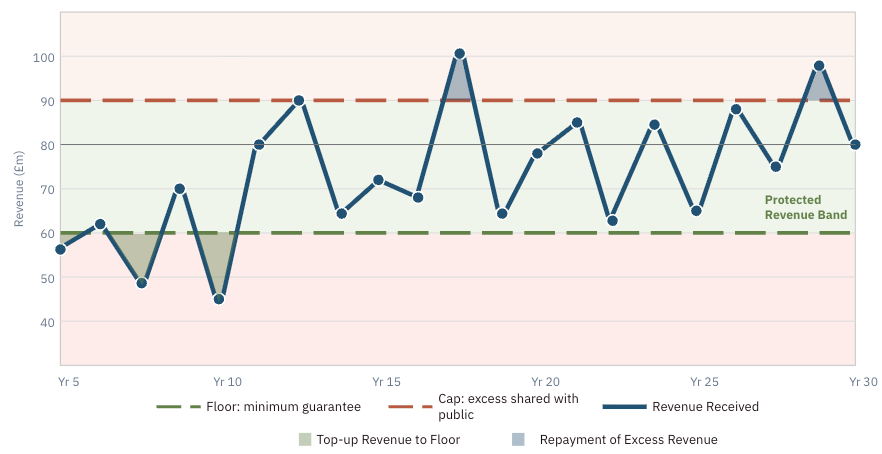
A revenue-led model could deliver far superior value for money compared to the current grant-based approach by enabling private capital to more easily flow into Landscape Recovery projects, helping finite public funding to stretch further.
Nature restoration at the scale required to increase economic resilience cannot and should not be borne by the public purse alone. The LRS is a critical step in truly valuing nature as functioning assets our economy relies on, helping the market to invest accordingly.
How I’m Feeling Now…
A balm for my climate anxiety this summer has been working for Great Yellow.
It’s been a privilege to work in an organisation alongside land owners and land managers, private capital and government to drive nature restoration across the UK. We have been working with our client The Wash Landscape Partnership to define the revenue-led model - who are seeking to deliver climate adaptation and water-system resilience across 8,233 hectares of contiguous coastal and lowland landscape in West Norfolk.
If we can prove this model in the UK - one of the world’s most nature-depleted countries - we can apply lessons for nature recovery globally.
Get in Touch
Are you working on nature recovery in the UK or elsewhere? I’d love to hear your ideas for addressing the funding, delivery and / or policy challenges.
1 State of Nature UK, 2023, State of Nature Partnership
2 National security assessment, 2026, Gov UK
3 Assessing the Materiality of Nature-Related Financial Risks for the UK, 2024, GFI
4 Nutrient Density of Regenerative Agriculture Produce, 2023, University of Lincoln, 2023
Sign up for our newsletter today.
